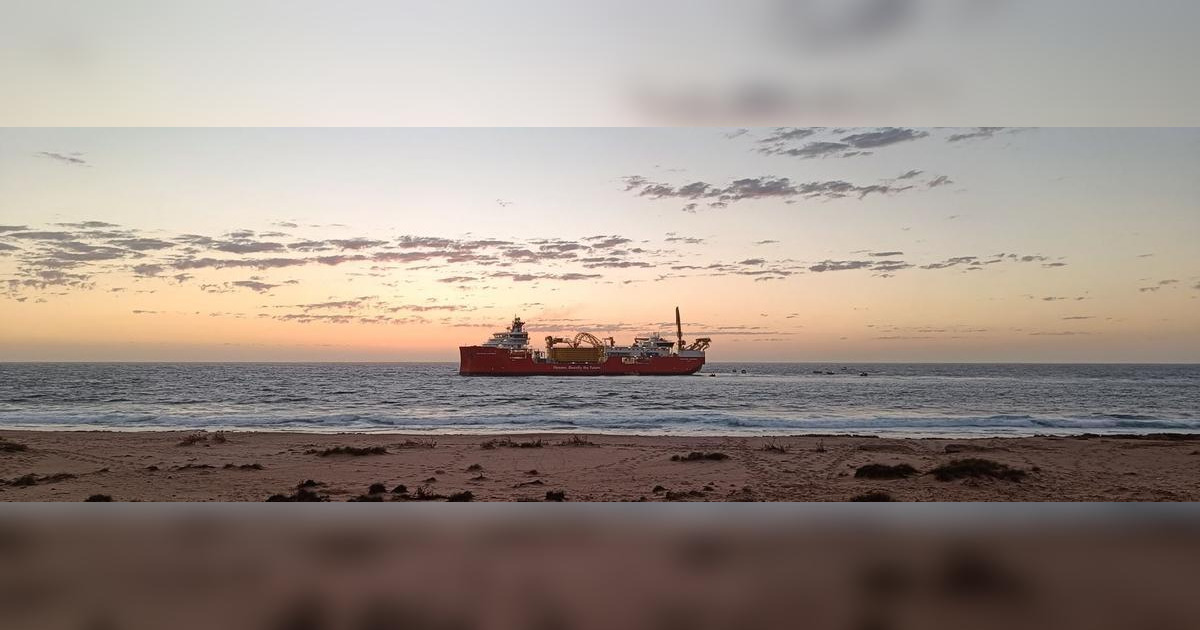
J-IC uses subsea compression to sustain gas supply to the Gorgon LNG and domestic gas plants on Barrow Island. The 145 kV cable runs from the island to a floating Field Control Station, which powers and controls the compressors on the seabed.
Eight Operations at Sea
- Working with teams onshore, the project team and Aurora’s crew completed:
- Overboarding and pull-in of the cable head to the Field Control Station
- Installation of 26 buoyancy modules, using a horizontal method developed by Nexans
- Laying of the cable in its dynamic configuration
- Installation of about 200 meters of VIV (vortex-induced vibration) strakes in the Scarp section
- Cable lay up the Scarp, a steep slope on the seabed route
- Float-out and pull-in of the second cable end at Barrow Island
- As-laid survey
- Trenching of 30 km of cable
Remaining Work
Before handover, three steps remain:
- Cable jointing at the Field Control Station and on Barrow Island
- Rock stabilization along the last 28 km of the route
- Final soak test, planned by the client for February 2027
From Jansz-Io to Floating Offshore Wind
A dynamic cable must carry high voltage while following the motion of a floating structure for decades. The configurations and installation methods used at Jansz-Io apply to other floating assets, including electrified offshore platforms and floating wind farms.
FAQ
What is the Jansz-Io Compression Project?
A Chevron Australia-operated project within the Gorgon development. Subsea compressors on the Jansz-Io field keep gas flowing to the processing plants on Barrow Island, Western Australia.
What Did Nexans Supply?
A turnkey 145 kV HVAC dynamic cable system, from design and manufacturing to installation by its vessel Aurora.
What is a Dynamic Subsea Cable?
A cable linking a floating structure to the seabed or to shore, built to flex with the structure’s movements. Buoyancy modules shape its curve in the water column; VIV strakes limit vibrations caused by currents. Read more on dynamic cables for offshore wind.
When Will the Cable System Be in Service?
Jointing and rock stabilization come next. The client plans the final soak test for February 2027.