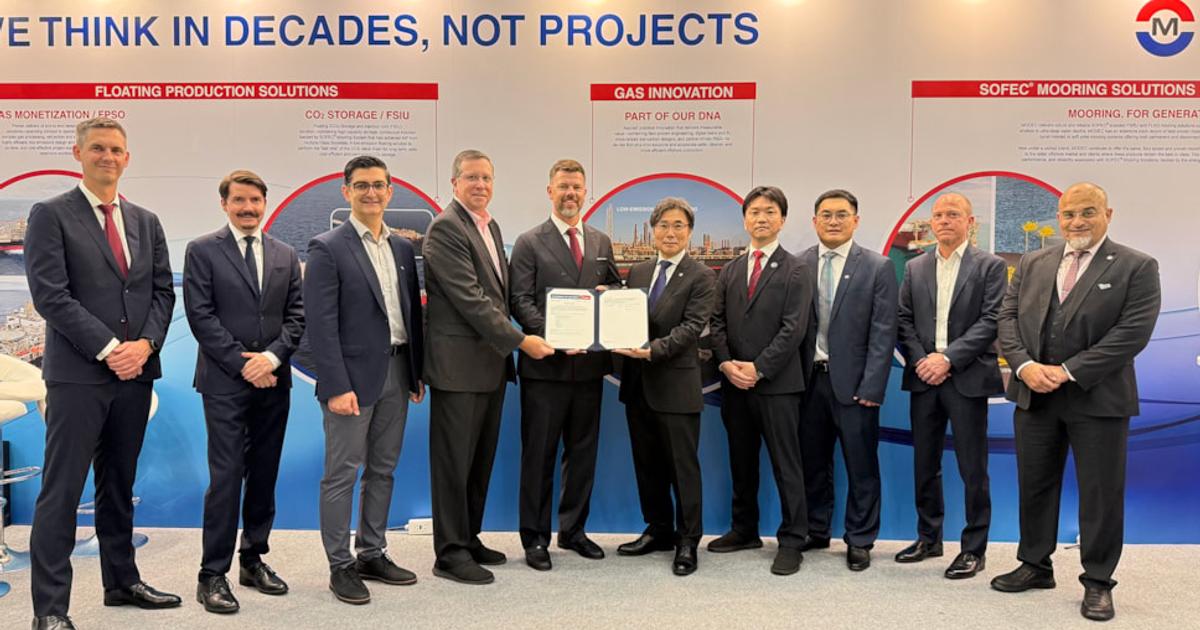
The Eld Power Module, which has achieved the Technology Feasibility and Concept Verification stages of NTQ, is a high-efficiency SOFC developed to run on FPSO-produced associated gas and alternative fuels. MODEC and Eld Energy aim to achieve electrical efficiency of up to 70 percent through fuel recovery and carbon management integration. The system is designed to connect with carbon capture equipment as that technology matures.
“Fuel cell technology has real potential to change the emissions profile of FPSO power generation. The ABS NTQ process gives MODEC and Eld Energy a structured way to demonstrate that the technology performs as claimed and that the risks are understood and managed. These steps are key to moving new technologies closer to routine offshore use,” said Matthew Tremblay, ABS Senior Vice President, Global Offshore Markets.
MODEC is planning to pilot a 40-kW installation and offshore trial on an FPSO, where it will be tested against real marine and production conditions. A successful offshore trial will advance the program to ABS Prototype Validation. Results from the 40-kW campaign are expected to feed directly into the next phases, including a 120-kW module and, in later stages, a multi-megawatt, full-scale SOFC system.
“MODEC aims to balance the seemingly conflicting challenges of protecting the global environment and ensuring a stable energy supply by innovative ideas using offshore floating facilities. We, together with ELD, are advancing the development of an innovative, compact, low-carbon power system by leveraging the high fuel efficiency of SOFC and their strong compatibility with carbon capture, aiming to expand the power supply solutions for offshore production facilities,” said Koichi Matsumiya, Chief Technical/Technology Officer of MODEC.
“This milestone shows that our novel offshore power generation concept can meet the demanding safety standards of the industry. Early engagement with class has been very helpful in bringing the product forward. This marks a significant step toward decarbonization of offshore operations,” said Hans Fredrik Lindøen-Kjellnes, CEO of Eld Energy.
The NTQ process advances through defined stages, from initial feasibility through prototype validation and system integration, with each stage producing a Statement of Maturity for project stakeholders, clients, and the supply chain. Learn more about how ABS is supporting the development of new technologies here.