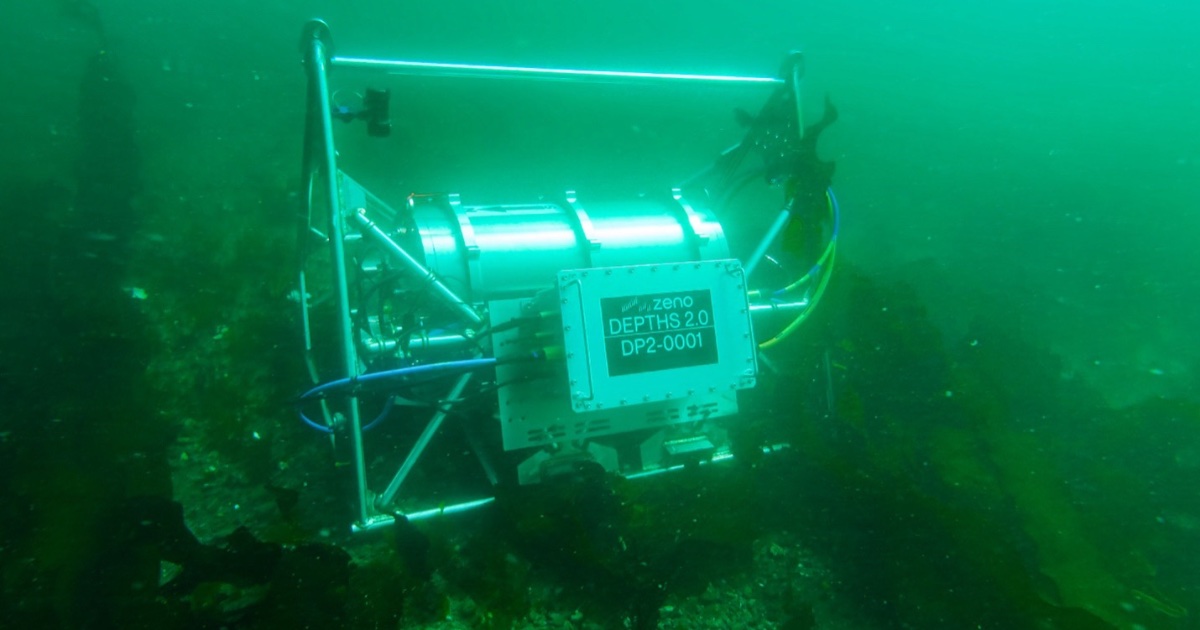
“There’s a difference between a design that works on paper and hardware that works in the field,” said Lindsey Boles, Chief Product Officer of Zeno Power. “This is the moment our team has been building toward: proof that this technology works outside the lab. Watching our ESG safely deploy, generate power, and recover it gives us real confidence heading into radiological testing.”
The power conversion technology is a Stirling engine, which converts heat into electricity by efficiently cycling gas through heating and cooling phases inside a cylinder. This approach allows Zeno’s technology to convert significant amounts of electricity, especially when compared to traditional thermoelectric conversion techniques.
This demonstration is comprised of a non-radiological ESG, operating in a maritime environment: the system uses an electric heating element in place of a radioisotope heat source to test the Stirling generator, material compatibility, and system functionality ahead of future radiological demonstrations. The system was successfully recovered following two weeks of operations.
Zeno’s maritime nuclear battery prototype went from final design to open-water testing in less than 16 months. With the ESG design now demonstrated in operational environments, Zeno is on track for a radiological demonstration in a controlled tank. The company’s first operational seabed deployment of a fueled maritime system is planned for 2027.