Ask someone outside the maritime industry what shipping means to them, and the answer is likely to revolve around ships, containers, and ports. For young professionals already working in the business, the picture is much broader—encompassing geopolitics, technology, finance, law, the energy transition, and global trade.
The problem is that many young people choosing a career know little about this side of the industry or the opportunities it offers. They may not realize that shipping provides early opportunities to take responsibility, work on issues with a global dimension, and collaborate across professional disciplines.
Raising awareness is only part of the challenge. Young professionals already in the industry also need opportunities to broaden their understanding of the industry as a whole and build networks beyond their own companies and fields.
This is YoungShip’s core role. Founded in Norway, the network for maritime professionals under 35 now boasts more than 5,000 members across more than 30 countries. In Denmark, YoungShip Denmark has grown from almost nothing to around 600 members in three years, with a program of industry talks, company visits, networking, and social events. Norway remains the network’s heartland, with chapters all along the coast.
Responsibility from Day One
For Mathilde Boye, a shipbroker at German group H. Vogemann and vice chair and head of events at YoungShip Denmark, one key attraction of shipping was the opportunity to take on real responsibility early in her career.
“From my first student job I was working on real problems, not watching from the sidelines,” she said. Her career so far has also changed the way she looks at events beyond the industry.
“Compared to five years ago, now I read the news through a whole new lens: how might it affect the company and our customers? What does it mean for the routes we sail?”
Exposure to the forces shaping global trade is a major source of professional interest in shipping. World events, technology, and regulation are not abstract issues; they influence markets, trading patterns, customers, and daily operational decisions.
The industry also draws on a broad range of educational and professional backgrounds, from operators, traders, and lawyers to engineers, analysts, financiers, insurers, and technology specialists.
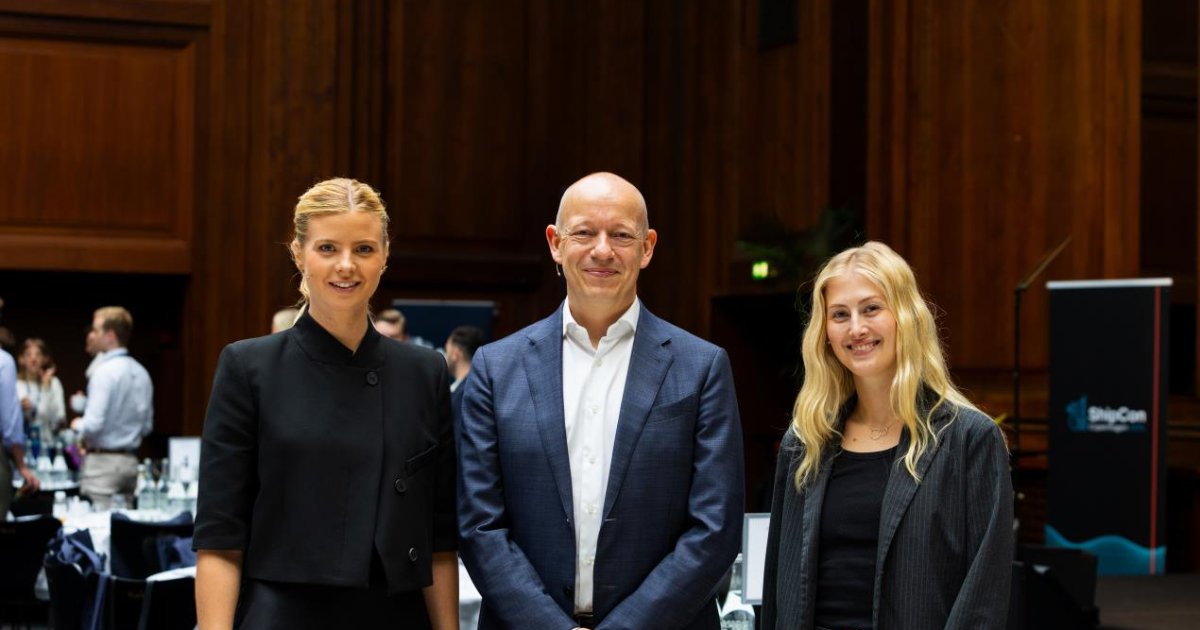
Marie Kristensen, a lawyer at DS Norden and chair of YoungShip Denmark, points to this unique diversity. “This industry demands real professional crossover,” she said. “There is a place for many different graduates and specialists, each contributing a different viewpoint. Bringing those perspectives together enables companies to successfully assess risks, develop solutions, and act on complex commercial and operational challenges.”
Looking Beyond Your Own Role
These issues were a major focus of ShipCon in Copenhagen, which attracted delegates from four continents for three days of talks, panel discussions, workshops, and networking at Nimb Axelborg, followed by a closing gala at the Langelinie Pavillonen.
Discussions ranged from geopolitics, regulation, AI, and digitalization to the green transition, the maritime skills gap, and building an international career.
Speakers included World Shipping Council Vice President for Environment and Climate Simon Bergulf; Gorrissen Federspiel senior partner Peter Appel; Irene Rosberg, director of Copenhagen Business School’s Executive MBA in Shipping and Logistics; Implement Consulting Group’s Morten Brandt Nilsson; and senior figures from NORDEN, TORM, BIMCO, Hafnia, Bureau Veritas, Bunker Holding, and the Mærsk Mc-Kinney Møller Center for Zero Carbon Shipping.
The program offered a chance to look beyond day-to-day roles. A broker could hear how regulators or technology specialists approach an issue; a lawyer could gain a better understanding of the commercial or operational considerations behind a decision.
“The aim isn’t to turn specialists into generalists, but to help people understand those parts of the industry their work touches,” said Kristensen.
YoungShip also provides what individual employers cannot easily replicate: a network extending across companies and national borders. “Our focus is to provide a place to meet and exchange experiences, compare approaches to shared industry challenges, and build long-term relationships,” she added.
Denmark’s Maritime Strength on Display
Hosting ShipCon in Copenhagen also highlighted Denmark’s role as a major global shipping center. Shipping is the country’s largest export industry, generating DKK 383.5 billion in exports in 2024 alone, while the national maritime cluster employs around 100,000 people.
The conference was supported by companies across the maritime value chain, as well as the A.P. Møller Foundation and the Danish Maritime Fund. Shipowner DS Norden received the Young Corporation Award in recognition of its support for young professionals.
The event clearly showed how closely commercial decisions, regulation, technology, and the energy transition are connected—and why it is so important for young professionals to see the wider picture.
Moreover, creating meaningful pathways into maritime careers is a shared responsibility across the maritime community. Companies, industry organizations, educational institutions, and professional networks must each do their bit to make shipping’s opportunities more visible—and secure a pipeline of young people who will lead the industry in the future.