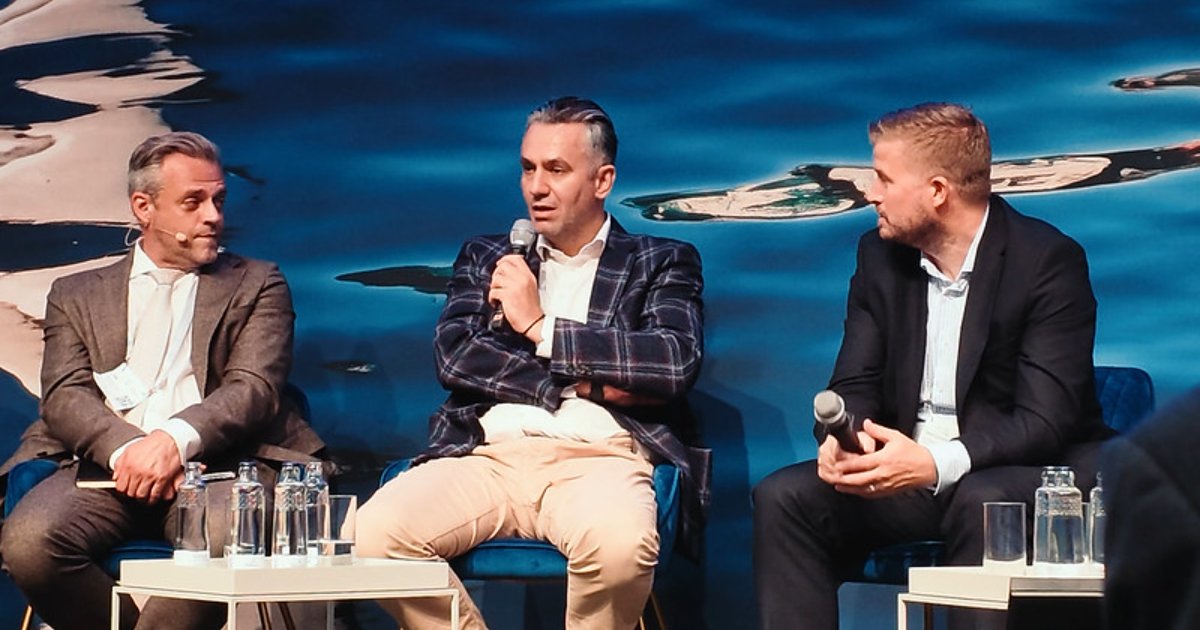
Speaking during the panel session, “Cracking the Code: Demand Aggregation as a Catalyst for Zero-Emission Shipping,” at SMM in Hamburg this week, Mr. Ioulianou said the maritime industry should draw on lessons from previous energy transitions, rather than attempt to solve the supply-and-demand challenge from scratch.
The limited availability and high cost of alternative fuels remain among the biggest barriers to maritime decarbonization. Shipowners are reluctant to commit without sufficient supply at commercially viable prices, while fuel producers require greater certainty over long-term demand before making major investment decisions, leading many to surmise this is a chicken-and-egg situation.
“I think the chicken-and-egg question is something we have been talking about for many years,” he said. “Today, we are moving in the right direction. We have seen in other industries how regulation and incentives can help bring costs down and accelerate adoption, such as the solar power industry, and shipping is now going through that same transition. Regulation is already having an impact, and we are seeing growing uptake of bioenergy and biofuels, alongside more solutions coming into the market to support compliance.”
Mr. Ioulianou said the introduction of FuelEU and the EU Emissions Trading System (EU ETS) has already demonstrated the ability of regulation to stimulate demand for lower-carbon fuels and encourage greater collaboration across the industry.
“Shipping’s growing experience with compliance through the likes of FuelEU and the EU ETS can play an important role in aggregating demand for new fuels,” he said. “By bringing shipowners and charterers together around shared compliance needs, we should be able to create the scale and certainty required to accelerate alternative fuel uptake and move towards a market where low-carbon fuels are available, accessible and affordable.”
During the panel, Mr. Ioulianou also called for revenues generated from maritime activity under the EU ETS to be reinvested directly into strategic maritime decarbonization projects.
With maritime EU ETS revenues expected to provide Member States with billions of euros, he argued that a greater proportion of this funding should be directed towards projects capable of removing barriers to maritime decarbonization and accelerating the development of alternative fuel infrastructure, particularly in major bunkering regions.
He also stressed that green shipping corridors could provide help to build the supply chain:
“Green corridors should reward vessels that actively reduce emissions, whether that is through cleaner fuels or energy-efficiency technologies. We need to create an environment where investment in lower-carbon operations makes commercial sense.”
Mr. Ioulianou added that shipping should recognize that previous energy transitions took years to achieve meaningful scale, and that maritime decarbonization should be viewed in the same context.
Rather than seeing this as a reason to delay action, he added that the industry must use regulation, collaboration, and aggregated demand to accelerate the transition and provide fuel producers and investors with clearer signals about where future demand will come from.
The panel was moderated by Chief Correspondent Gary Howard. Other speakers included Hanno Bromeis, Head of Port Energy Solutions at Hamburg Port Authority; Alex Hueser, Senior Advisor and Procurement Lead at the Zero Emission Maritime Buyers Alliance (ZEMBA); Arne Maibohm, Director Decarbonisation at Hapag-Lloyd; and Dr. Charlie McKinlay, Fuels and Technologies Lead at the Lloyd’s Register Maritime Decarbonisation Hub.