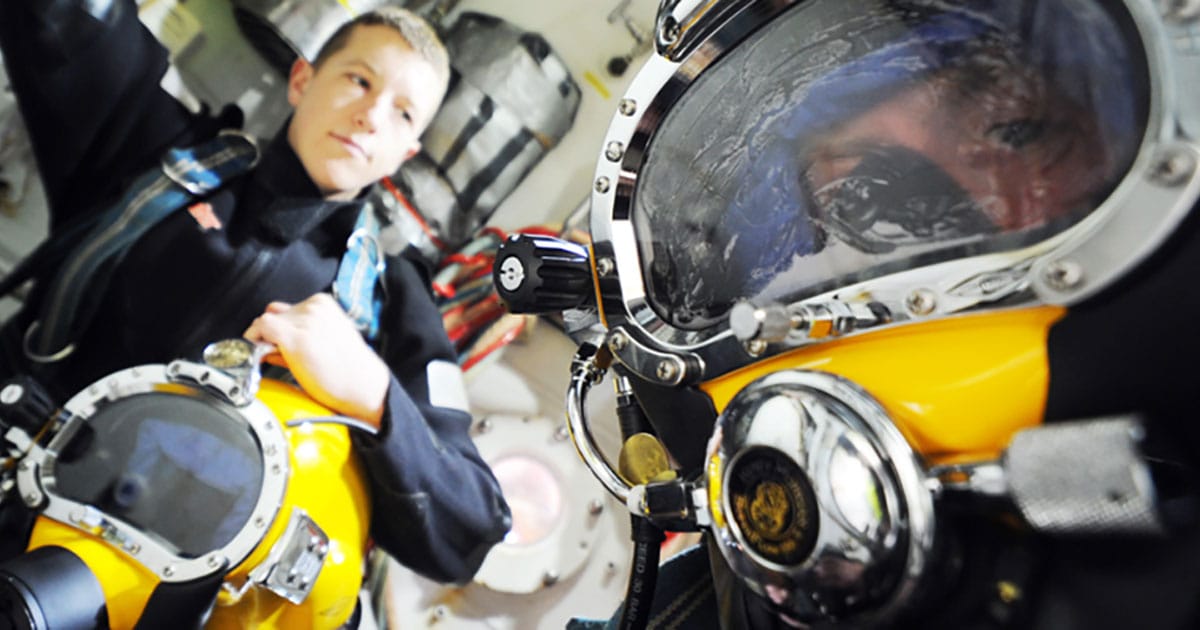
The International Marine Contractors Association (IMCA) has published new industry guidance designed to improve safety during subsea decommissioning and dismantlement projects, warning that ageing offshore infrastructure, incomplete historical records and changing site conditions are creating an increasingly high-risk environment for commercial diving operations.
As offshore oil and gas assets around the world reach the end of their operational life, decommissioning activity is expected to increase significantly over the next decade.
According to Rystad Energy, global decommissioning expenditure is forecast to reach approximately $81bn between 2025 and 2035 as operators respond to maturing fields and tightening regulatory requirements for abandonment and removal.
IMCA’s newly released Guidance on Diving Operations in Support of Subsea Decommissioning and Dismantlement Projects has been developed to help contractors, operators, and project teams better understand and manage the unique operational and safety challenges associated with dismantling ageing subsea infrastructure.
Unlike construction or inspection, repair, and maintenance activities, decommissioning projects frequently involve structures that were never designed to be removed. Some installations can be approaching 50 years old and, in many cases, engineering records may be incomplete or inaccurate, and the actual subsea condition of assets can differ significantly from original drawings or assumptions made during project planning.
Bill Chilton, Diving Manager at IMCA, said: “Subsea decommissioning and dismantlement activities present a distinct and increasingly prevalent set of hazards for divers. Where incidents have occurred, experience shows many could have been avoided through better planning, more rigorous verification of conditions, and disciplined management of change procedures.
“Many offshore structures now reaching the end of their operational life were installed long before dismantlement was ever considered. They were designed to operate, not necessarily to be removed safely decades later. That creates a very different risk profile for diving teams working subsea.”
The guidance highlights that once an installation enters cessation of production, the operational environment changes significantly. While some production-related hazards may reduce, new risks are introduced through increased vessel activity, heavy lifting operations, subsea cutting, breaking containment, diver intervention and simultaneous operations taking place within restricted work areas.
IMCA warns that incidents during decommissioning are frequently linked to assumptions about asset condition or reliance on outdated information.
The guidance therefore places strong emphasis on verifying “as found” conditions throughout the project lifecycle and ensuring effective transfer of historical information between all parties involved in the work.
The document also recognizes that conditions can evolve rapidly as dismantlement progresses. Structural integrity, seabed conditions, residual hydrocarbons, stored energy, and contamination risks may all change during operations, requiring continuous reassessment of hazards and control measures.
Particular emphasis is placed on the Management of Change (MOC) process. Industry experience demonstrates that changes to scope, methodology, equipment, sequence of work or environmental conditions are common during decommissioning campaigns, and that failures to identify or properly manage those changes have contributed to a number of high-potential incidents.

The guidance reinforces the need for formal, disciplined MOC procedures supported by clear communication, documented verification processes, and a shared operational understanding across project teams.
It also promotes the application of an “as low as reasonably practicable” approach specific to decommissioning activities, encouraging operators and contractors to challenge whether diver intervention is necessary in the first place and to consider remote systems or engineered alternatives wherever reasonably practicable.
Where diving operations are unavoidable, IMCA states they should only proceed with robust planning, verified information, clearly defined controls, and a safety culture that empowers personnel to question assumptions and exercise stop-work authority where concerns exist.
Drawing on industry experience, incident data, and existing IMCA guidance, the document addresses a range of hazards commonly associated with subsea decommissioning activities, including subsea cutting techniques, lifting operations, residual hydrocarbons, stored energy, and contaminated environments.
Rystad Energy recently warned that much of the growth in offshore decommissioning activity over the coming decade is expected to take place in regions with comparatively limited experience of large-scale dismantlement programs, increasing the importance of consistent industry guidance, operational discipline, and knowledge-sharing.
Bill Chilton said: “The risks associated with subsea decommissioning are still too often underestimated. Incidents continue to demonstrate the importance of following established procedures, managing change effectively, and verifying conditions rather than relying on assumptions.
“As decommissioning activity accelerates globally, the industry cannot afford complacency. This guidance has been developed to support a consistent, disciplined, and safety-focused approach to reducing risk and preventing serious incidents during diver-supported operations.”
The guidance is available through the IMCA Technical Library.