Members of Florida’s congressional delegation have introduced H.R. 9229, the Seaport Security Act of 2026, to strengthen protections for America’s port and maritime infrastructure against the growing threat posed by unauthorized unmanned aircraft systems (UAS) flights, commonly referred to as drones. The legislation, introduced by Congressman Jimmy Patronis with Congressman Mike Haridopolos as cosponsor, establishes a framework to help seaports deter and respond to unsafe or malicious drone flights while preserving authorized commercial, governmental and emergency UAS operations.
“I am proud to introduce the Seaport Security Act alongside Congressman Haridopolos,” said Congressman Patronis. “In Northwest Florida, our ports are critical to our economy, our military, and our national security. Yet here and across the country, growing drone threats are exposing dangerous gaps in our ability to protect this vital infrastructure. This commonsense legislation gives authorities the tools they need to detect and deter rogue drone activity. I urge my colleagues to support this bill and take an important step toward strengthening America’s port security and keeping our communities safe.”
America’s seaports are critical to the Nation’s economy, supply chain resilience, energy distribution, passenger transportation, and national defense. Current Federal authorities governing drone activity around maritime facilities are fragmented and do not provide ports with a clear, uniform framework to address unauthorized UAS operations.
“Florida’s seaports are essential to our economy, our national security, and our way of life,” said Congressman Haridopolos. “Protecting our ports means protecting America’s supply chains, our military readiness, and our national security. This legislation closes dangerous security gaps by giving our ports the tools they need to detect, deter, and respond to unauthorized drone activity while ensuring legitimate commercial and emergency operations can continue safely. Protecting our ports means protecting America’s supply chains, our military readiness, and our national security.”
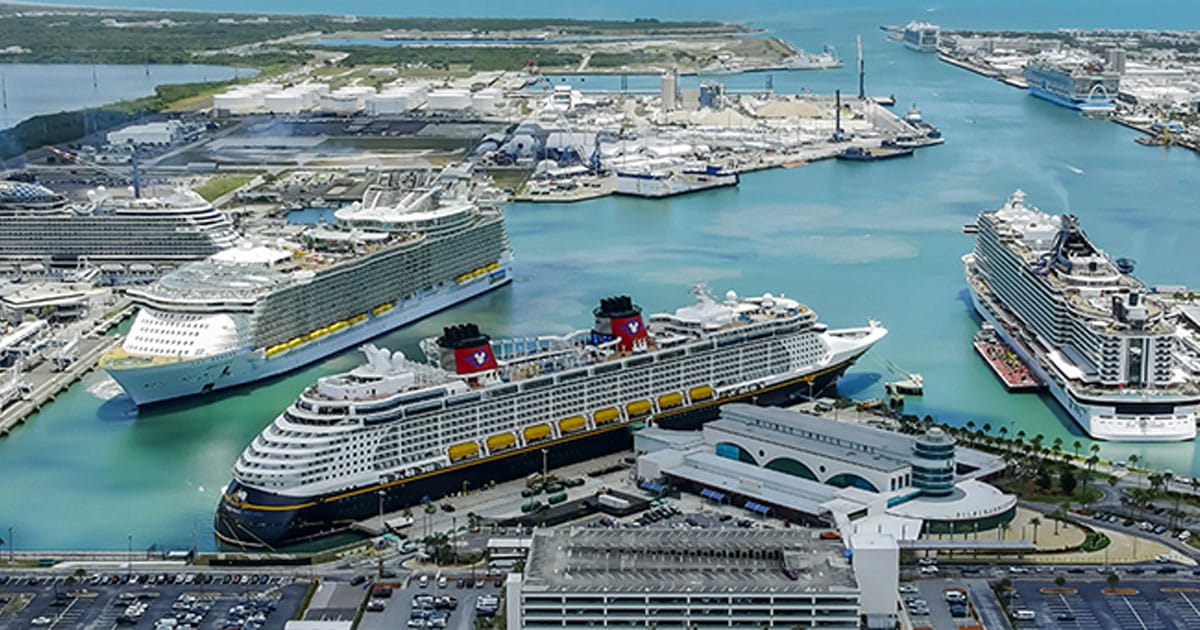
Managing unauthorized drone activity has been a growing and serious concern to seaports that must operate safely, securely and efficiently to meet the needs of the communities and industries each port serves. At Port Canaveral alone, more than 500 drone incursions were recorded in 2025, including unauthorized flights over nationally strategic aerospace and military operations and cruise terminals serving up to 60,000 passengers daily.
“Port Canaveral plays a vital role in global commerce making sure Central Florida consumers have reliable access to a multitude of critical commodities,” said Capt. John Murray, Port Canaveral CEO. “Thousands of cruise passengers, millions of tons of high value cargo, energy supplies, aerospace recoveries and military cargos are regularly moving in and out of our Port. We greatly appreciate the efforts of Congressmen Haridopolos and Patronis to support not just Florida’s seaports, but all U.S. seaports that are important to our nation’s maritime transportation system.”
“JAXPORT appreciates Congressmen Patronis and Haridopolos for their leadership in advancing the Seaport Security Act of 2026,” said JAXPORT CEO Eric Green. “As Florida’s largest container port and one of the nation’s strategic military seaports, JAXPORT understands the importance of protecting critical maritime infrastructure that supports our economy, supply chains, and national defense. We join our fellow seaports in supporting a coordinated federal framework that provides ports with the tools and authorities needed to address evolving drone threats while ensuring the safe and efficient movement of cargo, military assets, and passengers.”
“As the home port for Congressman Patronis in Florida’s 1st District, the Port of Pensacola greatly appreciates his, and Congressman Haridopolos’ leadership on this critical safety and security issue,” said RDML Lance Scott, USN(Ret), Director for the Port of Pensacola. “As a deepwater strategic seaport within Florida’s gateway for global trade and commerce, it is imperative that ports are empowered to maintain safe and secure environments from unauthorized or potentially malicious drone activity. The Seaport Security Act of 2026 is an important step forward in establishing the framework and authorities needed to protect our Nation’s critical infrastructure.”
The rapid proliferation of unmanned aircraft systems (UAS) has created a persistent and asymmetric threat that current aviation and maritime security frameworks are not fully designed to address. Yet, despite the critical role seaports play in supporting regional commerce, passenger transportation, energy distribution, and national defense, low-altitude airspace over ports remains largely unprotected.
“As one of the leading states in the nation for seaports, the Florida Ports Council recognizes the importance of addressing the unauthorized drone activity in the maritime industry,” said Florida Ports Council Chairman and Port of Palm Beach Executive Director Michael Meekins. “Our ports need clear federal authority and coordinated tools to detect and respond to unauthorized drone activities. The Florida Ports Council appreciates Congressman Patronis and Congressman Haridopolos for their leadership on the Seaport Security Act of 2026 and for recognizing the importance of protecting maritime facilities in the US.”
Under the legislation, controlled or restricted low-altitude airspace (under 400 feet) will be established over critical seaport areas, while enhanced UAS detection and mitigation capabilities will be coordinated through the Federal Aviation Administration (FAA) and U.S. Department of Homeland Security (DHS). With the authorized layered UAS detection and mitigation capabilities seaports are afforded protections to safeguard critical port infrastructure and operations from the threat of unauthorized drone flights.