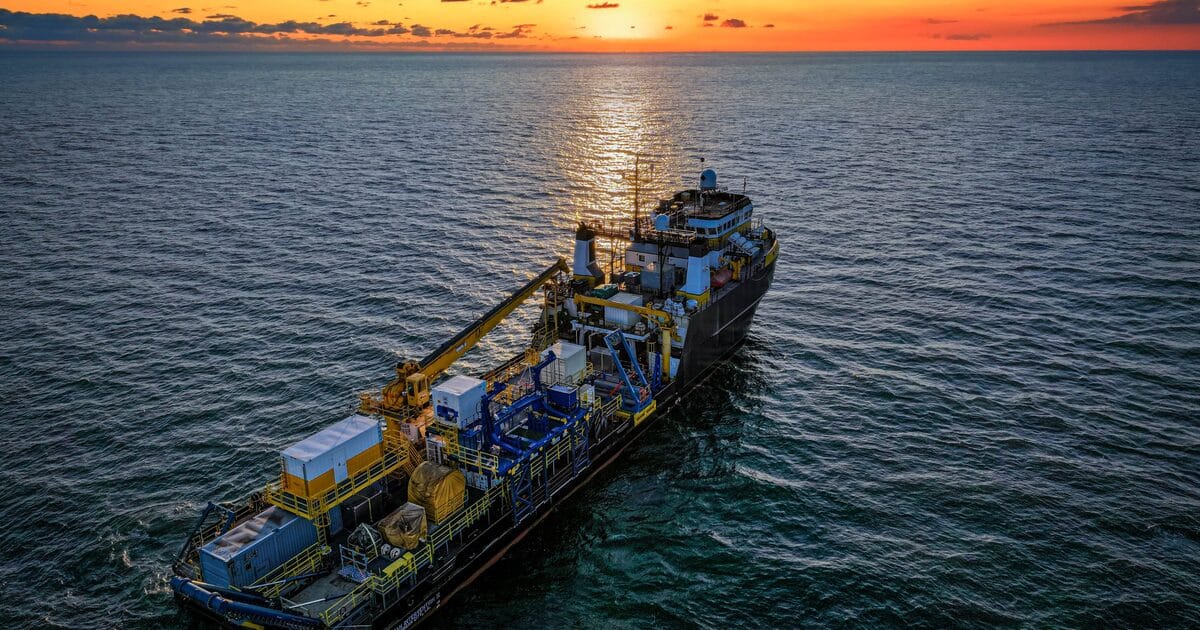
Under the contract, OI2 will deliver integrated geophysical, geotechnical, and autonomous survey services offshore Trinidad and the US Gulf. The program commenced in April 2026 and is expected to span approximately six months, with options for additional work and extensions.
Offshore Trinidad, the work scope includes 2D and 3D seismic data acquisition, high-resolution and ultra-high-resolution seismic surveys, seabed mapping, and geotechnical investigations. Geotechnical activities include seabed sampling using box cores and piston cores. The scope also encompasses autonomous underwater vehicle (AUV) surveys in deeper water areas, as well as shallow-water surveys using towed conventional geophysical systems. Operations in Trinidad are expected to last approximately four months.
In the US Gulf, OI2 will perform geotechnical investigations, AUV-based block surveys, and pipeline inspection activities. Pipeline inspections will incorporate non-contact cathodic protection measurement technology integrated with the AUV. US Gulf operations are expected to span approximately two months, with options for additional site and block surveys.
This campaign provides Oceaneering the opportunity to expand its track record in the OI2‘s operating model for offshore simultaneous operations, by combining geophysical and geotechnical technologies with USV-supported AUV survey operations.
Peter Buchanan, Oceaneering’s Senior Director—Survey, Products and Services, said: “We appreciate our customers’ trust in our ability to deliver reliable, integrated survey operations tailored to their project needs. By consolidating multiple survey scopes onto a single vessel and crew, OI2 supports single-pass and simultaneous operations that reduce campaign duration, minimize mobilizations, and shorten offshore exposure—improving efficiency and lowering overall emissions compared to traditional multi-vessel survey programs.”
Owned by Oceaneering, OI2 was purpose-built for geophysical and geotechnical surveys and underwent significant upgrades in early 2025 to support simultaneous, multi-discipline survey operations. These enhancements—including survey system upgrades, dedicated launch and recovery capability for autonomous systems, and modernized data infrastructure—enable efficient, integrated survey execution across complex offshore programs.