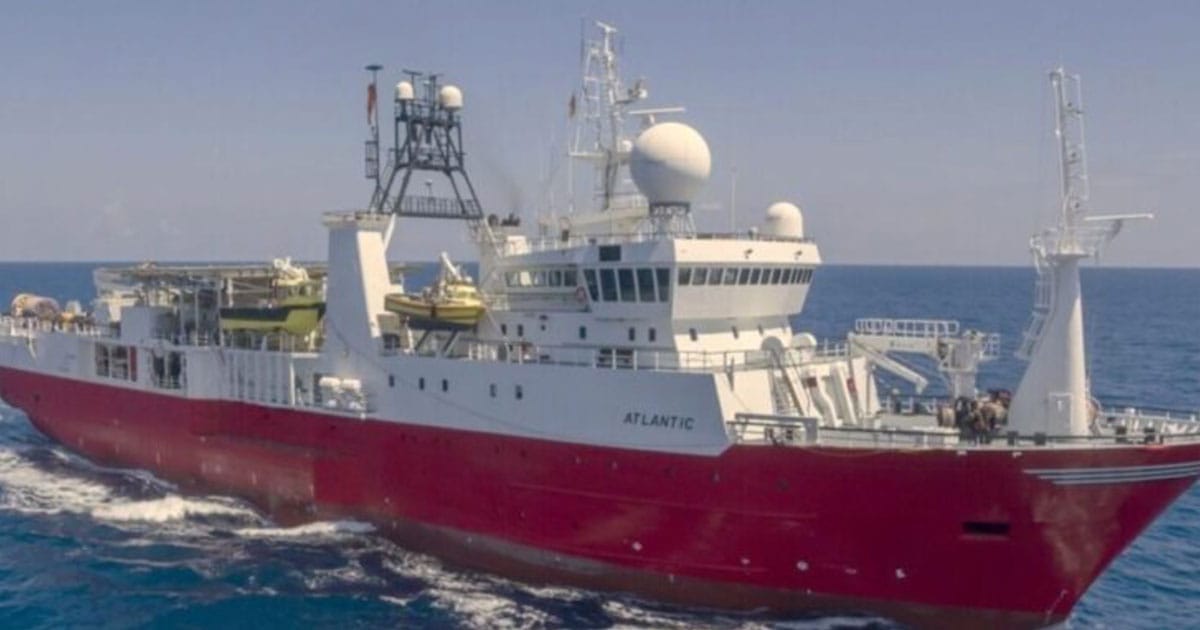
EMGS is entering a new phase under new ownership and is currently rigging vessel Atlantic, a former seismic vessel previously known as Sanco Atlantic, for upcoming CSEM operations offshore Norway.
The campaign follows newly signed contracts with a combined value of approximately USD 6 million. The work will be carried out in collaboration with Sea Shipping AS, the owner of Atlantic, and marks an important step in EMGS’ continued development as a focused marine CSEM company with global reach.
“We are very pleased to be rigging a new vessel and moving into this next phase for EMGS,” said Bjørn Petter Lindhom, CEO of EMGS. “With new owners, a strong vessel partner, and renewed activity offshore Norway, we are building a more flexible platform for CSEM acquisition. The Norway campaign is an important start, but the broader trend we see is international.”
EMGS has recently seen a significant increase in interest from international oil and gas companies. This is already showing up in more CSEM feasibility modelling, as operators evaluate where the technology can add value before committing to acquisition. One key driver is the renewed focus on frontier exploration, as companies again take positions in large offshore acreage positions in search of material reserve replacement and the type of large discoveries that can move the needle for a portfolio.
“Frontier exploration is coming back into focus because reserve replacement is again becoming a strategic issue for many companies,” Lindhom added. “When operators take on large offshore positions, especially in deepwater and frontier basins, they need better tools to rank prospects before drilling. CSEM can help operators rank prospects by adding resistivity information, highlighting where the subsurface response is consistent with a charged oil or gas prospect and where capital may be better directed elsewhere.”
Following the Norway campaign, EMGS sees a number of international opportunities where CSEM can support exploration and appraisal decisions in frontier and deepwater basins. With Atlantic as a flexible offshore platform, EMGS also sees opportunities to support broader marine geophysical operations, including sparse Ocean Bottom Node (OBN) seismic, where CSEM can be co-mobilized or combined with other offshore survey operations.
“Our core remains CSEM, but the market is increasingly looking for smarter ways to combine marine geophysical acquisition methods and develop new survey concepts that deliver more decision value from each mobilization,” Lindhom said. “Atlantic gives us a platform that can support that direction.”
Atlantic will be operated in collaboration with Sea Shipping AS, which is supporting EMGS with vessel capability and marine operations. The rigging and mobilization work at Green Yard also reflects a practical and sustainable approach to vessel mobilization, reusing and adapting an existing offshore vessel platform for a wider range of marine geophysical operations.
The collaboration also fits into Sea Shipping’s broader SubTech initiative, aimed at developing flexible offshore vessels as platforms for subsea technology, marine data acquisition, and multi-sector offshore services.
“We are happy to start this collaboration with EMGS,” said Jarle-Petter Jøsok, CEO of Sea Shipping AS. “Atlantic is a strong platform for different types of marine geophysical work, and this collaboration with EMGS is a good example of what we want to build through SubTech. We want to create a broader ecosystem around subsea technology, where capable vessels, experienced operators, and innovative marine technologies can be combined more efficiently.”
EMGS will provide further updates as vessel preparation and campaign planning progress.