A cross-industry coalition, including Bibby Marine, offshore wind developers, vessel operators and technology providers, is calling for urgent action to accelerate the decarbonization of offshore wind operations. A new position paper reveals the sector-wide benefits of offshore vessel electrification and asks government and regulators to remove their barriers to the development of offshore charging.
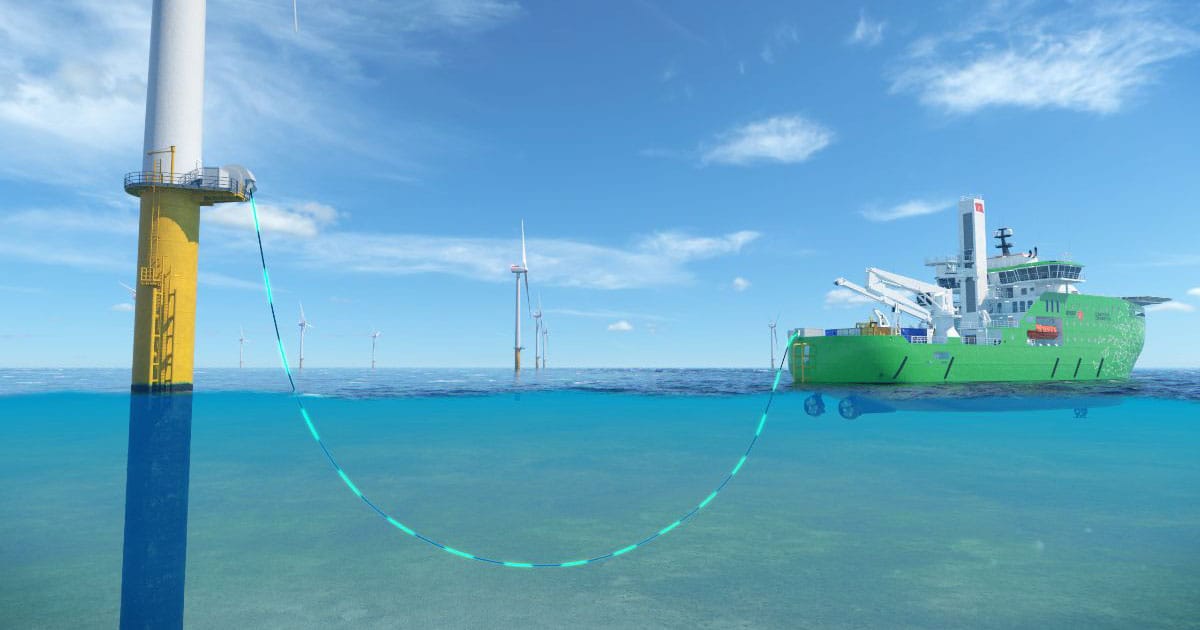
The paper highlights offshore charging, where vessels draw renewable power directly from wind farms, as one of the most promising and cost-effective solutions for reducing emissions from offshore support vessels. While the technology has matured significantly in recent years, the report finds that the key barriers to deployment are no longer technical, but regulatory, commercial and operational.
Vessel operations currently account for a significant proportion of offshore wind lifecycle emissions, making them a critical focus for decarbonization efforts. Offshore charging offers a viable path to zero-emission operations, while requiring only a minimal proportion of a wind farm’s electricity output.
The paper sets out three key recommendations to accelerate commercial adoption:
- Integrate offshore charging into early-stage wind farm development.
- Clarify and enable commercial access to offshore electricity.
- Deliver a full-scale offshore charging demonstrator.
Gavin Forward, New Build Fleet Director at Bibby Marine, said: “The technology to enable offshore charging is already here. The challenge now is creating the right regulatory and commercial environment to bring it into widespread use. By addressing these barriers, we can unlock a practical and scalable route to decarbonizing offshore wind operations.”
Øystein Huglen, Head of Innovation at Maritime CleanTech, said: “The maritime sector is integral to the wave of global electrification, and an increasing number of fully electric maritime operations are becoming commercially viable now and in the years ahead. Offshore charging is clearly a game changer, especially for service vessels with access to locally-sourced electric energy from within wind farms.”
Bibby Marine is playing a leading role in this transition through its development of the world’s first electric Commissioning Service Operation Vessel (eCSOV), reinforcing its commitment to driving innovation and delivering sustainable solutions for the offshore wind sector.
The position paper has been developed collaboratively by organizations across the offshore wind value chain, demonstrating strong industry alignment on the need to move from demonstration to deployment.
The industry is now urging policymakers, developers and stakeholders to act on the recommendations to ensure offshore charging can play a central role in achieving net zero targets.
Download the full position paper here: https://www.bibbymarine.com/government-and-regulators-must-remove-their-barriers-to-offshore-charging-uptake-in-offshore-wind/